Home / Blog / Career paths
Career paths
CLM administrator jobs: read the platform state before the title
A CLM administrator may inherit a design project, a support queue, a data problem or a product roadmap. The platform's current state tells you more about the job than the software name does.
Start with the platform state, not the feature list
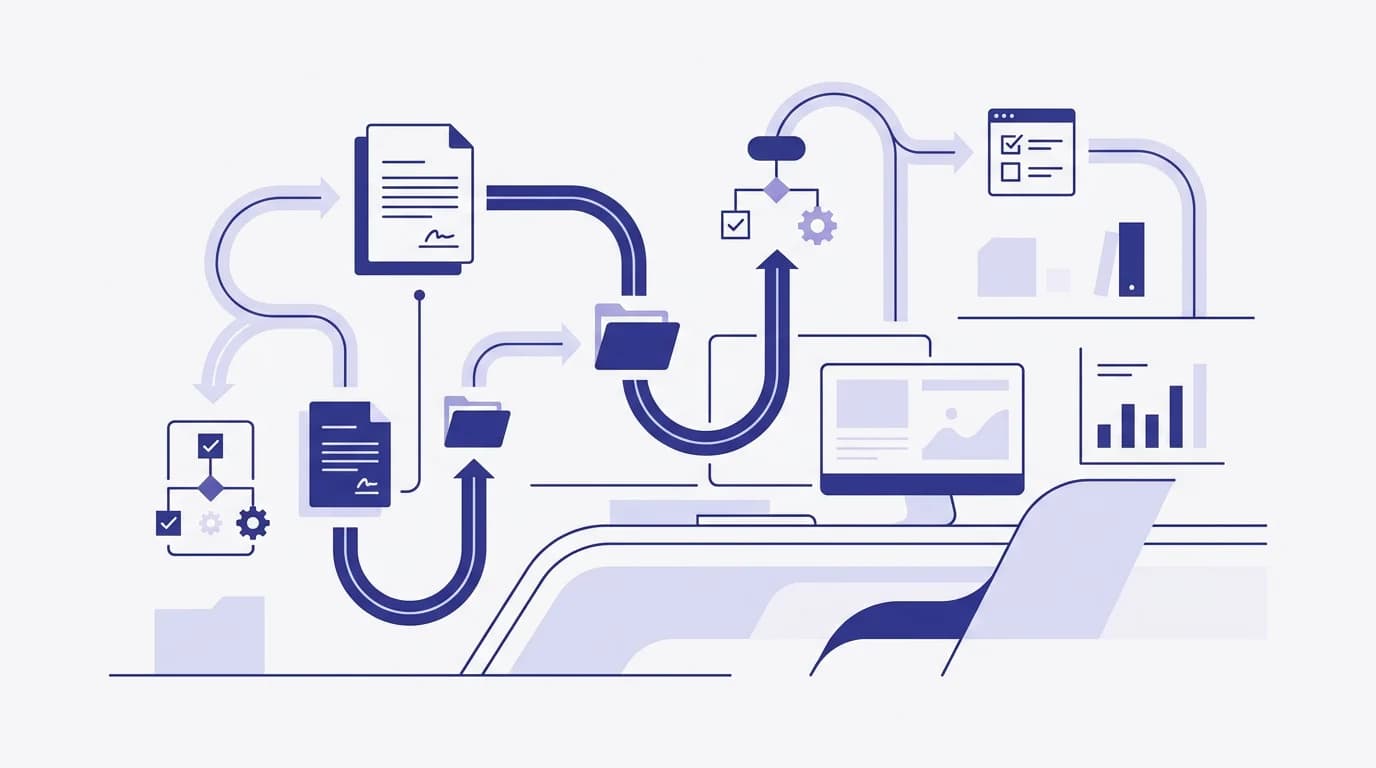
CLM administrator postings often repeat the same nouns: workflows, templates, metadata, permissions, integrations, reports and training. Those nouns do not reveal the operating problem. A platform being implemented needs requirements, configuration, test evidence and launch readiness. A recently launched platform needs defect triage, data repair, support and adoption work. A stable platform needs controlled changes, reliable integrations and governance. An expanding platform needs a roadmap, reusable design standards and decisions about where new automation belongs. Ask what state the platform is in and what must be different six months after the hire.
Implementation work turns contract policy into testable system behaviour
Before launch, the administrator translates a contracting process into forms, fields, approval paths, templates, permissions and handoffs. The useful artifact is not a diagram alone. It is a traceable set of requirements, configured rules, test cases, defects, decisions and release criteria. CLOC's technology competency says technology should follow operating needs and connect processes, platforms and partnerships. Ironclad's current administrator documentation likewise separates workflow building, permissions, integrations, sandbox testing and launch preparation. In a posting, look for implement, configure, migrate, UAT, acceptance criteria, data mapping and go-live. Compare this work with the broader legal technology implementation guide.
Stabilisation work finds where the designed process breaks in use
After launch, clean configuration is not enough. Requests arrive with missing data, approval rules meet exceptions, users choose workarounds, integrations fail and imported records expose inconsistent metadata. The administrator needs an observable queue: issue, affected workflow, reproduction steps, business impact, owner, decision and retest result. Training belongs here only when the problem is knowledge; a broken rule or unclear policy needs a different fix. This state rewards troubleshooting, support writing, release discipline and the ability to separate a user question from a process, data or system defect.
Steady operation is a control role, not passive maintenance
In a mature environment, the administrator controls changes to workflows, content, access and data without making the platform brittle. Amcor's current CLM and Contract Administrator role joins intake and approval flows with escalation paths, dashboards, user access, obligations, post-signature monitoring and an auditable repository. Athenahealth's current technical administrator role adds platform reliability, integrations, releases, data integrity, issue resolution and reporting. The recurring operating record should show the requested change, policy owner, affected data and integrations, test coverage, approval, deployment, monitoring and rollback path. That record demonstrates judgment better than a list of configuration features.
Expansion work changes the role from ticket owner to product owner
Expansion begins when the team adds contract types, business units, connected systems, analytics or AI-assisted steps. The administrator must decide whether a request should become a reusable capability, a local exception or no system change at all. CLOC's September 2026 specialty analysis places contract and document management beside technology and legal engineering, showing why some postings now blend platform ownership, data design and process translation. Read decision verbs carefully. Maintain and support signal operational ownership; define standards, prioritise, govern, sequence and approve signal product or portfolio authority. The CLM-versus-contract-manager comparison helps test whether the role owns the platform or the agreement work itself.
Use a change packet to prove transferable experience
Build one compact example around a real change you were authorised to discuss, or a clearly labelled fictional workflow. Include the trigger, current-state failure, users affected, required data, rule or configuration change, dependencies, test cases, exception path, approval owner, release note and post-release check. Then state your boundary: what you configured, what Legal decided, what IT or the vendor delivered, and what evidence showed the change behaved as intended. This format can translate experience from CRM administration, procurement operations, business analysis, contract coordination, implementation consulting or legal-technology support without claiming experience you do not have.
Five questions expose the actual job
Ask which platform state best describes the next year; who owns contract policy and approves configuration changes; which integrations and data flows fail most often; what evidence is required before a release; and which measures distinguish system health from business adoption. Then inspect the posting for mismatches. A role accountable for global workflows but unable to control standards has a governance gap. A role promising analytics without ownership of metadata has a data gap. A role expected to automate work without access to process owners has a decision gap. Review legal operations analyst requirements, the wider legal operations career path, current legal operations roles, and create a job alert using terms that match the platform state you can operate.