Home / Blog / Role guides
Role guides
Legal AI operations jobs: implementation, evaluation and governance
Legal AI work now appears inside engineering, legal technology, knowledge, innovation and broad legal operations roles. A better comparison starts with four control points: workflow, evaluation, adoption and portfolio decisions.
Start with the control point, not the AI title
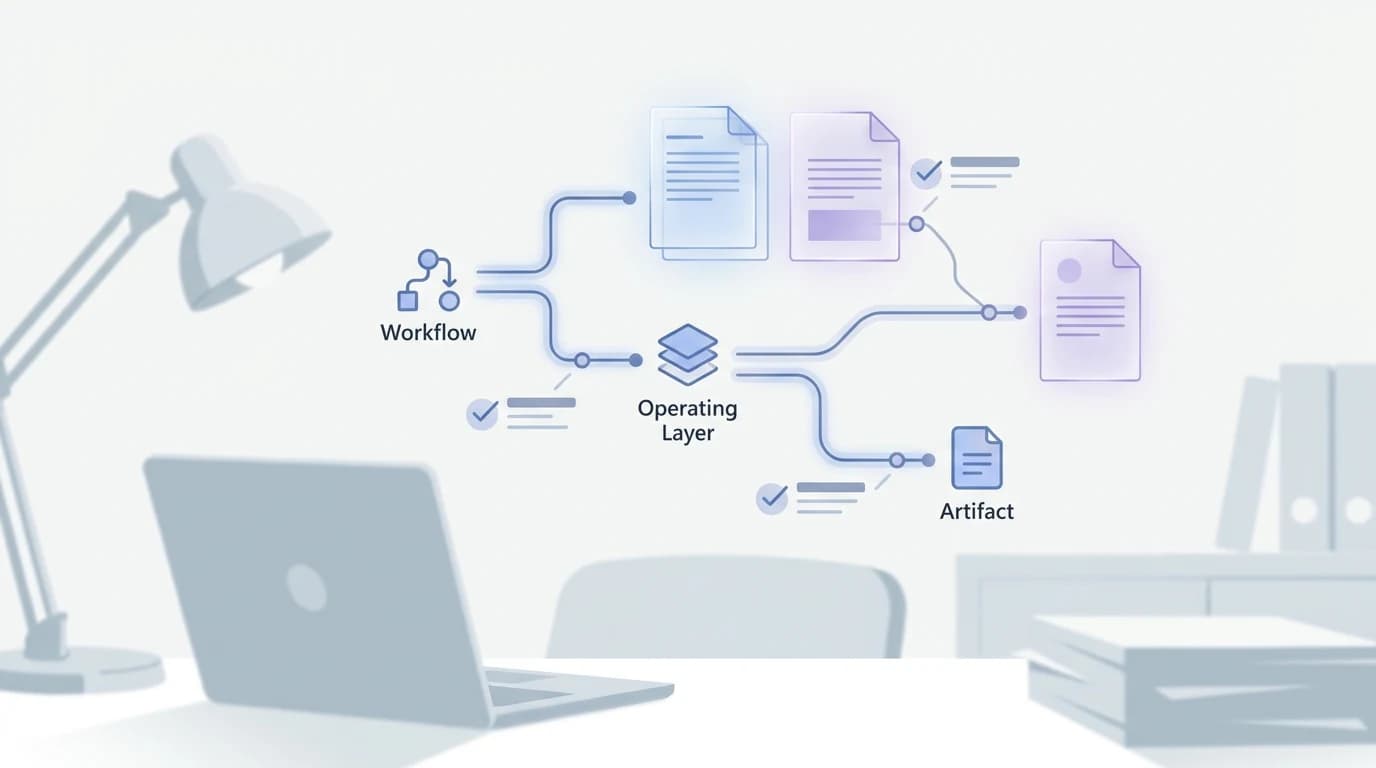
Current postings use different titles for overlapping work and ordinary legal operations roles may include AI alongside CLM, knowledge management or intake. Classify the job by the decision it expects you to own. Workflow ownership turns a legal task into a repeatable process. Evaluation ownership defines how outputs are tested and when they fail. Adoption ownership makes the process usable after launch. Portfolio ownership decides which use cases receive resources and which controls apply. One role can span several points, but the verbs and expected artifacts usually reveal its centre of gravity.
Workflow builders specify what happens before and after the model
Holland & Knight's current AI Legal Engineer description joins prompt design, retrieval pipelines, document templates, evaluations and guardrails with attorney training and change management. That combination matters: the model call is only one step inside an operating workflow. Read for who identifies the legal task, prepares source material, defines the handoff to human review, records exceptions and maintains the process as needs or tools change. Useful application evidence might be a workflow map, a source-selection rule, versioned instructions or an exception log. Do not imply that operational ownership includes final legal judgment unless the posting says so.
An evaluation chain is stronger evidence than a polished demo
When a posting names evaluation, trace five linked questions: what representative examples form the test set; what quality threshold applies; who reviews uncertain or high-risk outputs; what failure stops release or triggers escalation; and how drift or user feedback is monitored after launch. Lennar's current Senior Manager, Legal Technology description makes the business-side evidence concrete through requirements, acceptance criteria, UAT, defect tracking, quality thresholds for AI-assisted outputs, training and adoption reporting. A candidate who can explain this chain shows delivery judgment without pretending to be the model engineer or legal approver.
Implementation and portfolio roles operate on different clocks
An implementation owner works toward a usable release and then stabilises it through support, feedback and iteration. A portfolio owner works across quarters: selecting use cases, sequencing investments, setting governance, allocating capacity and deciding what to continue. Scopely's September 2026 Director, Legal Operations description makes that split explicit. Its senior manager owns day-to-day CLM, knowledge and AI execution, while the director owns roadmap, governance, resources, vendors, adoption, quality and business impact. Compare the legal operations director versus manager guide when a posting mixes hands-on delivery with department-level authority.
Build one evidence packet for the layer you want
For workflow work, pair a process map with inputs, review points and an exception method. For evaluation work, show a small test set, criteria, results and the change made after a failure. For implementation, use requirements, acceptance criteria, a UAT record, training material and a post-launch issue. For portfolio work, show a use-case register, prioritisation rationale, governance checkpoint and decision log. Remove confidential legal, client and personal information. The knowledge management guide explains the source and taxonomy layer; the CLM administrator guide covers platform ownership. Browse legal operations jobs and set a job alert using terms such as evaluation, UAT, adoption, governance, automation and legal technology rather than relying on one title.