Home / Blog / Role guides
Role guides
Matter management analyst jobs: decode the role before you apply
Matter management can mean guarding the opening of a law-firm client and matter, or running the intake, data, workflow, and reporting spine of an in-house legal department. The record may look similar; the decisions around it are not.
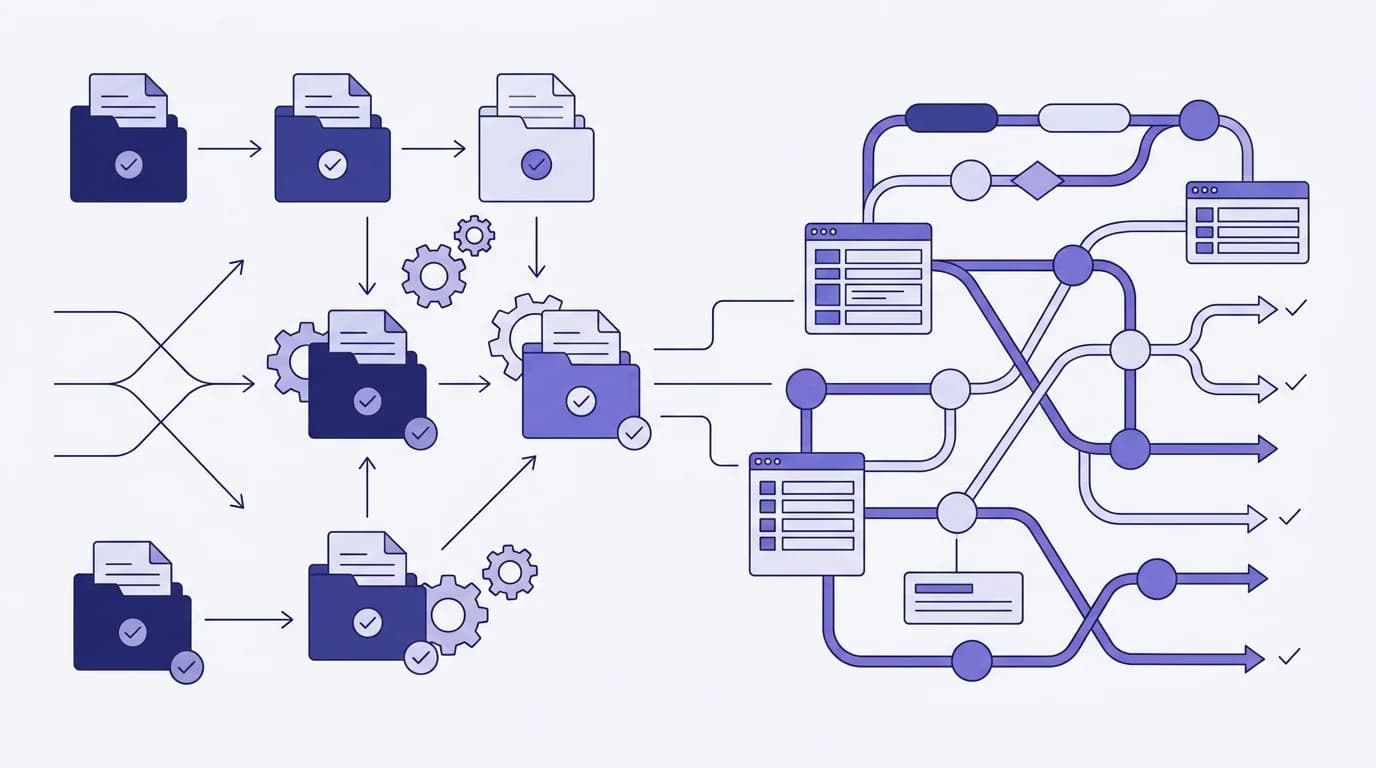
Matter management is not one job family
Start with the employer, not the title. At a law firm, a matter management analyst may sit in new business intake or enterprise risk. The role helps open clients and matters only after required commercial, regulatory, billing, tax, and internal data conditions are met. In an in-house legal department, matter management is more likely to mean capturing requests, routing work, maintaining matter records, supporting the system, and turning matter activity into workload or performance reporting. Both roles care about accurate records and controlled handoffs. One protects the firm's client-and-matter opening process; the other helps a corporate legal team run its work from intake through closure.
Read the matter record as a map of the job
A matter record is more than a name and number. Depending on the organization, it can hold the requesting business unit, matter type, responsible lawyer, internal and external resources, risk or complexity, status, dates, budget, billing terms, vendor, documents, and outcome fields. The analyst's real job is visible in who supplies those fields, who can approve or change them, and what happens when data is missing. If the record cannot be opened until conflicts, client terms, rates, tax, or risk checks are resolved, the role is an opening-control function. If the record starts with a business request and later feeds assignment, workload, spend, cycle-time, or service reporting, the role is an operational workflow function.
In a law firm, the opening gate may be the centre of the role
A current Herbert Smith Freehills Kramer matter management description places the role in New Business Intake. Its tasks include opening clients and matters, generating matter numbers, checking setup against legal and billing requirements, coordinating with Finance, Risk, and Tax, maintaining later changes, supporting e-billing setup, and answering users' questions from the practice-management system. That is materially different from running the legal department of a company. Candidates from conflicts, client onboarding, finance operations, billing, compliance administration, or practice support may have relevant evidence if they can show careful research, accurate data changes, clear escalation, and reliable service under deadlines.
In-house matter management follows the work, not only the opening
CLOC's matter lifecycle model organizes corporate legal matters across intake, planning, execution, and review. Current in-house analyst descriptions make that lifecycle concrete. Commerce Bank asks for matter intake, workflow tracking, system support, dashboards, documented procedures, and coordination with Finance, IT, and Compliance. Panasonic combines request triage and data capture with system administration, data quality, dashboards, spend reporting, vendor support, and process documentation. In these roles, opening a record is the beginning. The useful output is a trustworthy flow of work and data that supports assignment, status visibility, resource decisions, reporting, and later improvement.
Build application evidence around control points
Choose examples that show what you controlled, not simply which software you touched. Useful evidence includes designing or improving an intake form, validating required fields before a record moved forward, resolving duplicate or inconsistent records, documenting an approval path, maintaining access and permissions, reconciling matter data with billing or finance data, producing a report that exposed missing information, or coordinating a change across legal and another function. Explain the trigger, the rule or quality check, the exception, the handoff, and the record left behind. Do not claim ownership of legal, risk, or commercial decisions if your role was to gather information, administer the process, or escalate to the decision-maker.
Use four questions to avoid applying to the wrong role
Ask what event creates a matter, which team owns the opening decision, which systems receive or send matter data, and what the analyst is expected to improve after the record exists. Then inspect the nouns around the title. Conflicts, new business intake, client acceptance, rates, tax, and practice management point toward law-firm opening controls. Business requests, triage, workload, dashboards, legal spend, vendors, and service delivery point toward in-house legal operations. For the wider analyst skill set, read legal operations analyst skills. Compare the scope with the legal operations career path, then review current legal operations jobs and set a role alert using the workstream terms that match the role you want.